
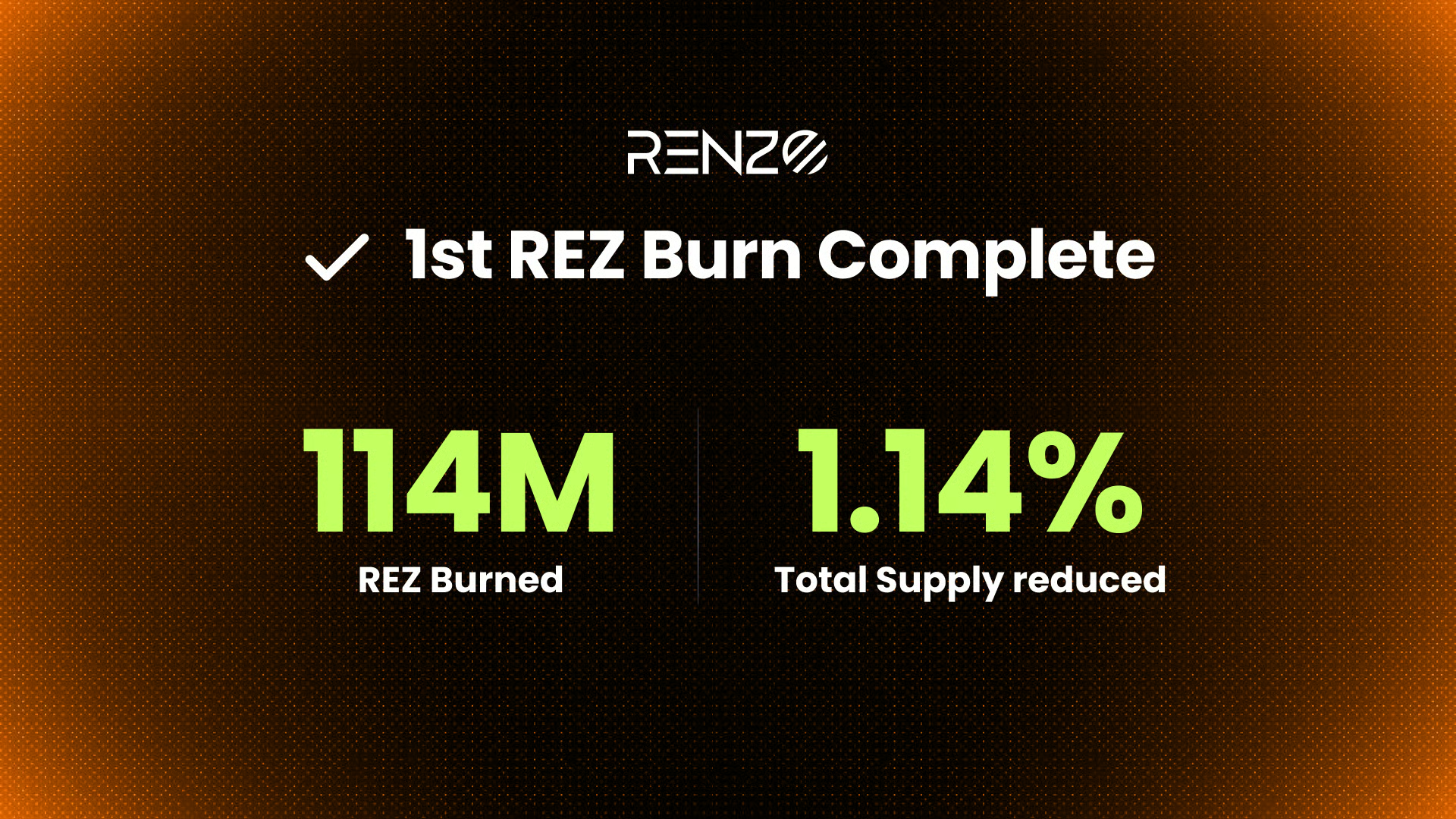
Renzo Protocol just completed the first buyback and burn event, we are calling Renzo Riduzione, buying back over 127,117,412 REZ from the open market using protocol revenue and then subsequently burning 90% or 114,405,671 REZ and rewarding ezREZ stakers the remaining 10%.
This inaugural event permanently reduced 1.14% from REZ total supply, and much more to go.
Background
Renzo Protocol just wrapped up one of its biggest community milestones yet. Governance proposals RP-6(A) and RP-6(B) officially passed, kicking off the REZ Buyback and Burn Program.
What Does This Mean?
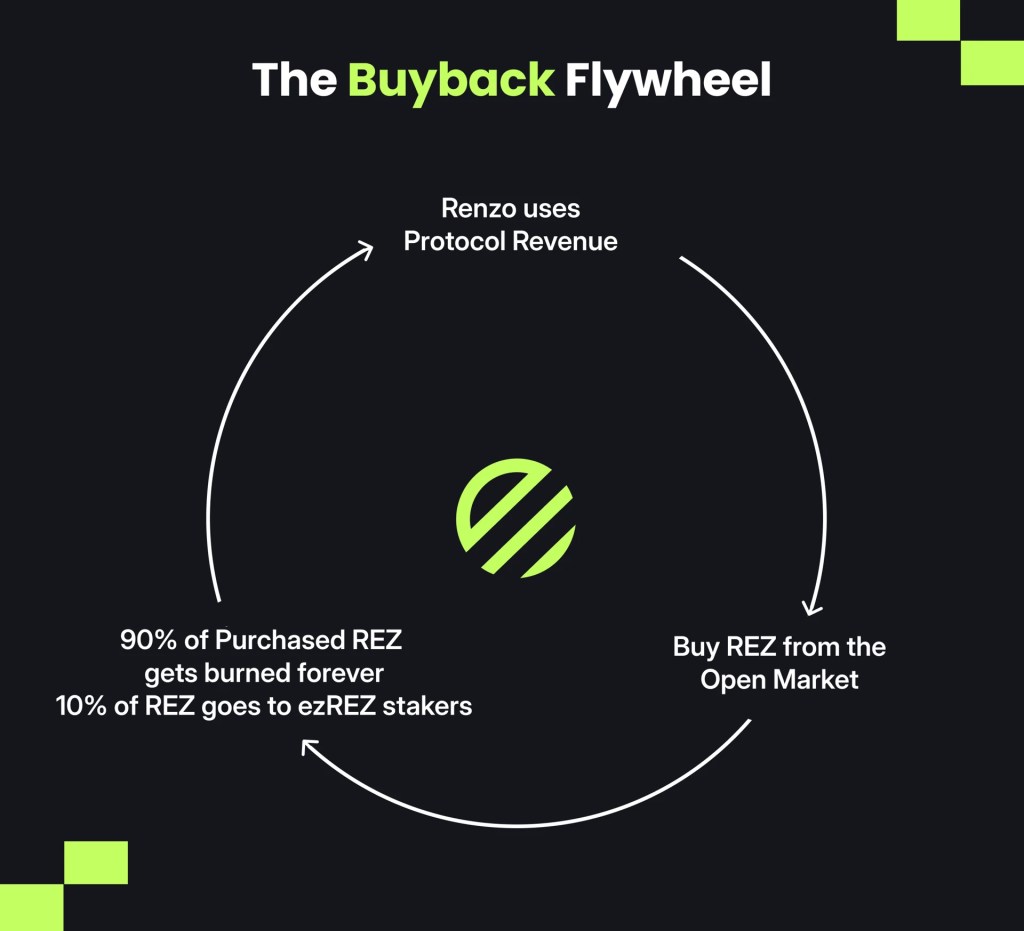
The Renzo DAO approved using up to 100% of protocol revenue to buy back as much as 10% of the total REZ supply. The community also decided that 90% of the purchased REZ from the open market be burned forever and the other 10% will go to ezREZ stakers.
How Does This Benefit REZ Holders?
We want to articulate clearly the key benefits and show why this initiative is important.
- Increased REZ scarcity and reduced REZ supply: burning tokens permanently removes them from circulation. With less REZ available, each remaining token will not be diluted.
- Potential Support: If REZ demand stays constant or increases while supply shrinks, that’s great for value accrual.
- Value Alignment: Buybacks funded by protocol revenue shows that growth directly benefits REZ token holders, not just the treasury. The connection between protocol success and holders is inextricably linked.
- Transparency and Commitment: This structured, public, and transparent program shows our commitment to the success of the Renzo Protocol and to REZ holders, and to sustainable token economics.
- Reduced Inflation Pressure: Fewer tokens means less dilution risk for current holders.
The Buyback Flywheel
Visually, these are the key steps in the Renzo Buyback and Burn program. All else equal, executing on this program will accomplish the key benefits outlined in the section above.
And, as Renzo creates new expansion and growth opportunities, leading to increase in revenue, it allows us to purchase even more REZ from the open market.
More on our plans for the demand-side growth in a later post 🙂.
How Will The Buyback and Burn Program Work?
The Buyback Program will occur progressively over a six-month window, from November 2025 to May 2026, with each tranche verifiably executed on-chain and reflected through Renzo’s public Dune dashboard. This ensures that community members can transparently track every buyback and burn event as it unfolds.
- Buy Bot: Revenue is directed to this address and a bot automatically executes the repurchase of REZ on CowSwap. https://etherscan.io/address/0x7d7445b6e7098efBDEAfA4A24f443847D5dAA262#internaltx
- Burn Address: 90% of the repurchased REZ tokens will be sent to the burn address, permanently removing them from circulation: https://etherscan.io/address/0x000000000000000000000000000000000000dEaD
- ezREZ: 10%https://etherscan.io/address/0x77b1183e730275f6a8024ce53d54bcc12b368f60
Note: Renzo team began testing in October 2025, but the program officially launched in November 2025.
Ensuring Transparency
The Renzo Protocol Dune Dashboard, provides real-time visibility into all buyback and burn transactions. Community members can track the cumulative amount of REZ repurchased, burned, and distributed to ezREZ stakers, ensuring every stage of the program remains fully aligned with the initiative.
Access the public dashboard here.
About Renzo Protocol
Renzo is building the institutional-grade gateway to DeFi, providing seamless, one-click access to sophisticated yield strategies across the restaking and liquidity ecosystem.
As a strategy manager and liquid restaking infrastructure provider for EigenLayer, Symbiotic, and Jito, Renzo unifies the fragmented DeFi landscape into a single, accessible interface for both institutions and retail users. Its suite of assets and vaults delivers diversified and composable exposure to restaking and DeFi yield opportunities.
Through its focus on security and capital efficiency, Renzo is redefining how capital interacts with DeFi – bridging institutional standards with permissionless innovation to make advanced yield generation accessible, compliant, and scalable.
 Renzo Protocol